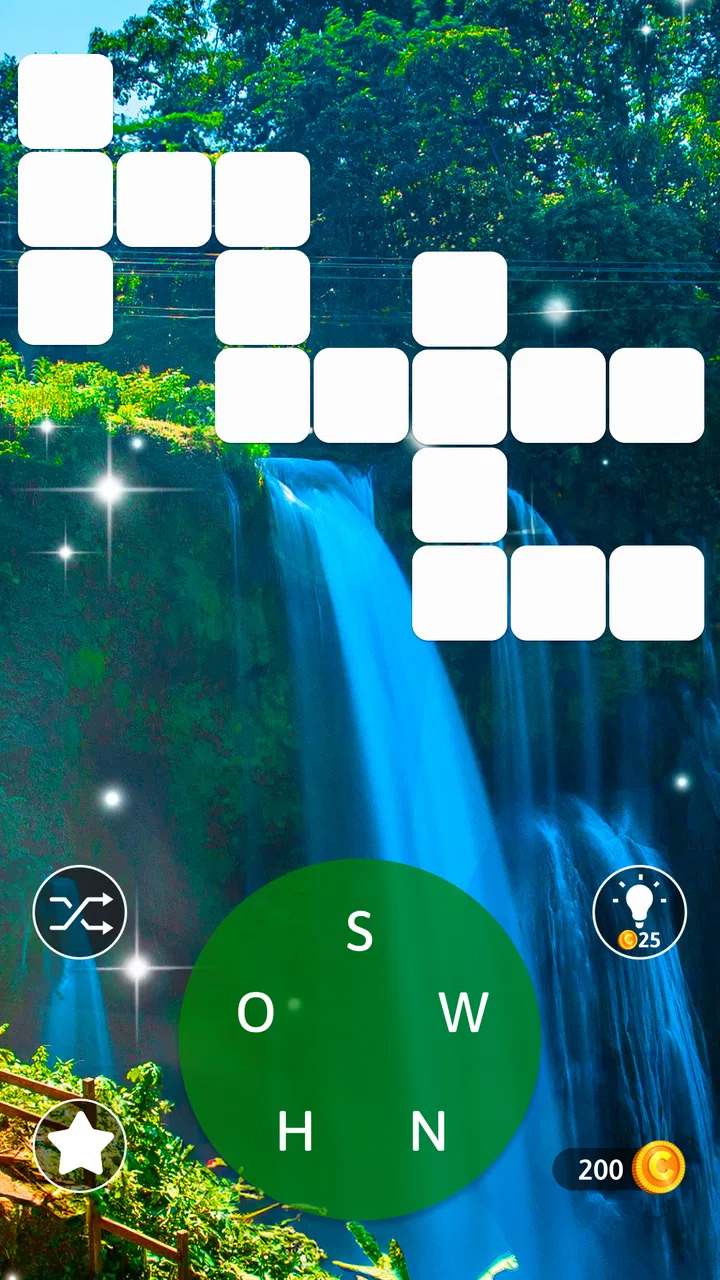
Word Maker: Words Games Puzzle
- 4.5
- Rating
- 10.00M
- Installs
- Free
- Price

 Analysis by App-foxy
I found Word Maker: Words Games Puzzle easiest to understand when I treated it as a small shared break rather than a serious study tool. It is a free word game from AAA Fun, built around making words from available letters and moving through a large collection of puzzles. The basic idea is familiar, but the appeal comes from how quickly it fits into an ordinary moment: one person starts a puzzle while waiting, another notices a possible word, and suddenly a short pause becomes a quiet household challenge.
That shared-device quality is important because this is not the kind of game I would choose for a long, story-driven session. It works better when people can take turns naturally, without needing a complicated setup or a separate competitive system. I could imagine leaving it available on a family tablet, using it during a coffee break, or passing the phone to someone who wants to solve one more puzzle. My overall impression is positive, although the simple format also creates limits that become more noticeable after repeated play.
How the word puzzles fit into everyday use
The game belongs firmly in the word-puzzle category, and its main attraction is immediate accessibility. You do not need to learn a fictional world, memorize a set of controls, or understand a long tutorial before beginning. The task is recognizable from the first few rounds: look at the letters, connect or arrange them into words, and use the result to progress. That makes it particularly suitable for a shared device where different people may open the game at different times.
You May Also Like

 Blood Strike: 2.5 Anniversary
Blood Strike’s Loadouts Turn Every Drop Into a Tactical Gamble
A close look at Blood Strike’s custom loadouts: how fast access to signature weapons reshapes its battle royale rhythm, rewards preparation, and narrows the gap between fights.

 Pandora - Music & Podcasts
Pandora’s Music Is Easy to Start, but Harder to Recover
Pandora’s strength is its low-effort path from a seed to a station. Its weak spot is how much confidence it asks you to place in connection, setup, and quiet recovery.

 8 Ball Pool
 Is Built on Rivalries, Rematches, and Routine
A close look at the rivalries, rematches, shared routines, and unanswered safety questions that turn a quick pool match into a persistent mobile community.

 Samsung Music
’s Quiet Strength Is Playing What You Already Own
Its reach comes less from spectacle than from dependable access to a personal library. That simplicity is both the app’s strongest retention engine and its ceiling.

 AccuWeather: Weather Radar
AccuWeather Review: A Quick, Clear Forecast for Everyday Decisions
For everyday plans, the best forecast is the one you can understand quickly. AccuWeather makes rain timing, radar, and local conditions easy to act on, with a few trade-offs.

 Hill Climb Racing
Why Hill Climb Racing Still Turns Crashes Into One More Run
A tiny car, a bumpy hill and one more upgrade: Hill Climb Racing keeps resurfacing because its simple chaos makes every near-miss feel personal.
More From Our News Desk
View All News


In my experience, the best household use is informal rather than scheduled. Someone can solve a few rounds while another person is preparing dinner, then leave the device ready for the next player. A child may look for short, obvious words, while an adult tries to find less familiar combinations. The game can therefore create conversation without requiring everyone to have the same skill level. The important boundary is that players are sharing the puzzle, not necessarily sharing a personal profile or a synchronized family activity.
I would not describe it as a full vocabulary course. It can encourage attention to spelling and expose players to words they do not use every day, but solving a word does not automatically explain its meaning or teach it deeply. I found it more useful as a light mental exercise: it makes me slow down, test letter combinations, and notice how many possibilities can hide in a small group of characters.
The scale is one of its strongest practical features. There are more than 3,000 levels, so the game is designed for continued use rather than a single afternoon. That does not mean every puzzle will feel equally fresh. Familiar patterns can become easier to recognize, and players who spend a lot of time with word games may eventually notice a repeating rhythm. Still, the amount of content makes it a reasonable choice for people who want a dependable casual game instead of something they finish quickly.
What changes when several people use one device
A shared phone or tablet changes how I judge the experience. On a personal device, I can simply continue from where I stopped. On a household device, that same continuity can become confusing if several people use the same progress. One player may advance through a level while another expected to return to it, or someone may spend a helpful resource without realizing that another person was saving it. Because of that, I would agree on a simple household rule before sharing it: either everyone solves the current puzzle together, or each person uses the game during a clearly separate turn.
This is one of the more useful ways to approach the app. It is not necessary to invent a formal family competition. A parent and child can alternate attempts, with the younger player choosing a word first and the older player checking for another possibility. Two adults can use it as a quick evening challenge, stopping whenever the conversation becomes more interesting than the puzzle. The game supports this kind of cooperation because the central action is easy to observe and explain.
At the same time, I would not use a shared device if preserving separate progress is essential. The game is much more comfortable when one person owns the session. If several household members want independent advancement, separate devices are the cleaner arrangement. That is not a criticism of the word mechanics; it is simply the practical difference between a private casual game and a communal screen.
Setup, boundaries, and the first session
Word Maker: Words Games Puzzle is free to start, which lowers the barrier for trying it on a spare device. The age classification is Everyone, making it a natural candidate for a household where adults and younger players may both be present. I still prefer to establish expectations before handing over the device, especially around optional purchases. The game includes in-app items priced from under a dollar to several dozen dollars per item, so “free” should be understood as free to download and begin, not as a promise that every optional element costs nothing.
For a shared tablet, I would keep the purchasing decision with the device owner. That means children can enjoy the puzzles without being asked to decide whether an extra item is worth buying, and adults avoid an awkward conversation after an accidental tap. This is a household boundary rather than a gameplay tip, but it matters because the game is designed to be easy to open and continue. A clear rule is more reliable than assuming every player will understand the difference between ordinary progress and an optional purchase.
I also recommend starting with a short trial session instead of presenting the game as a new daily obligation. Let each person solve a handful of puzzles and see whether the pace suits them. Some players enjoy the calm repetition; others quickly want more variety, a stronger competitive element, or a more educational explanation of the words. That first session reveals which group you have before anyone invests time or money.
The current version is 1.40.1, and it runs on Android devices using version 7.0 or later. That makes compatibility worth checking before installing it on an older household phone or tablet. On a newer device, the more important question is not whether it can run, but whether the screen is comfortable for everyone who will use it. Word puzzles benefit from readable letters and enough space to tap accurately, especially when a younger player or an older family member is taking a turn.
Coordinating turns without turning it into homework
My favorite shared approach is to make the puzzle the conversation starter, not the entire activity. One player can point out a possible short word, another can search for a longer one, and everyone can discuss whether a strange-looking combination seems plausible. This keeps the game social while avoiding the pressure of a formal score battle. It also gives less experienced players a way to participate without feeling that they are slowing everyone down.
A useful routine is to give each person one uninterrupted attempt before offering suggestions. That small boundary makes the game feel fair and preserves the satisfaction of discovery. If someone is stuck, the next player can explain how they are grouping the letters rather than simply taking over. I found this especially helpful with children: the goal becomes noticing patterns and trying alternatives, not just reaching the next level as fast as possible.
Another practical tip is to stop at a natural point. With a large level library, it is easy to say “just one more,” but repeated short sessions are more sustainable than forcing a long sitting. The game is at its best as a flexible filler between other activities. If a household wants a dedicated evening game, a title with explicit multiplayer rules or a shared score system may create a clearer structure. This one is better for cooperation that happens spontaneously.
There is also a trade-off between helping and preserving difficulty. When I explain a word immediately, the puzzle becomes faster but less rewarding. When I let another player struggle for too long, the shared session loses momentum. I would use hints sparingly if they are available during play, and I would first try verbal clues such as the word’s first letter or general length. That keeps the group involved and avoids turning every obstacle into a purchase decision.
Age context and trust on a family device
The Everyone rating makes the game approachable for mixed-age households, but an age label does not remove the need for adult judgment. The most relevant issue here is not the wordplay itself; it is how the device is managed. Younger players may understand the puzzle immediately while still needing guidance about purchases, screen time, and whether the progress belongs to them or to the whole household.
I would be comfortable introducing it to a child as a cooperative vocabulary activity, provided expectations are simple. We could solve words together, talk about unfamiliar terms, and stop after an agreed number of rounds. I would not present it as a replacement for reading or structured language practice, because the game’s role is lighter. It can reinforce curiosity about words, but the deeper learning comes from discussing meanings and using new words outside the app.
For adults sharing the device, trust works differently. The main concern is respecting another person’s progress and not treating every available puzzle as communal property. A quick note such as “I stopped after this level” can prevent confusion, particularly if the game remains open on a kitchen tablet. If the household is sensitive about personal progress, a shared installation may be the wrong arrangement even though the game itself is easy to understand.
I also think the game suits players who prefer quiet concentration. It does not require everyone to speak, compete loudly, or react in real time. That makes it a good option for a waiting room, a calm evening, or a short break when people are physically together but doing separate things. Conversely, families looking for energetic collaboration may find the experience too solitary unless they deliberately turn each puzzle into a group activity.
Where it beats familiar alternatives, and where it does not
Compared with a daily word puzzle, this game offers a much longer runway. A daily format creates a clear ritual and a shared reference point, but it can also leave you with nothing new to solve once the day’s challenge is finished. Here, the extensive level collection makes it easier to play whenever you have time. The compromise is that the daily format often feels more distinctive, while this game relies on the steady pleasure of progressing through one puzzle after another.
Compared with a crossword, the experience is more approachable for a quick session. Crosswords usually reward broad knowledge, clue interpretation, and patience with a larger grid. Word Maker: Words Games Puzzle focuses my attention more narrowly on letters and possible word forms. That is helpful when I want something uncomplicated, but players who enjoy clever clues, cultural references, or a complete grid may find it less satisfying.
Compared with a competitive word battle, this is calmer and easier to share with uneven skill levels. There is no need for everyone to act at the same speed during a household session. The downside is that people who thrive on head-to-head pressure may miss the urgency and direct comparison of a multiplayer alternative. I would choose this game for relaxed repetition, not for proving who can think fastest.
Compared with a dedicated vocabulary app, it is more playful and less structured. I can see it encouraging a child to ask what an unfamiliar word means, but I would not rely on it to provide the explanations, exercises, or learning path that a language app might offer. That distinction is useful when deciding what to install: this is a word game first, with vocabulary benefits as a welcome side effect.
Small frictions that affect long-term enjoyment
The straightforward design is both the game’s strength and its main limitation. Because the central action is so easy to grasp, the early experience is welcoming. However, players who want dramatic changes in rules, a story, or a strong sense of personal identity may eventually feel that the format is repetitive. The large number of levels helps with longevity, but quantity alone cannot replace variety for every type of player.
Optional purchases are another point to consider. A free starting point is convenient, especially when several people are deciding whether they like the game. Yet the presence of items ranging from $0.99 to $45.99 means I would not leave purchasing decisions vague on a shared device. Even if a household never buys anything, the owner should know that the game is not limited to a completely purchase-free experience.
There is also a subtle social limitation: the game does not automatically solve the problem of shared ownership. If one person values uninterrupted progress and another enjoys experimenting, their habits may clash. I would either assign the game to one regular player or agree that the current puzzle is open to everyone. That simple decision improves the experience more than trying to force a family leaderboard onto a game that works naturally as a casual solo activity.
For me, the app is most enjoyable in short bursts. I can play while waiting for an appointment, during a quiet commute as a passenger, or when I want a break from more demanding games. Longer sessions are possible, but the repeated word-making loop becomes less absorbing once I stop feeling curious about the next puzzle. Knowing that limit helps me use it well instead of judging it unfairly against games built for extended play.
Who should install it and who should look elsewhere
I would recommend it to anyone who likes letter puzzles, wants a free game to sample without a complicated learning curve, or needs something that can be shared informally across ages. It is especially suitable for a household that enjoys talking through answers rather than competing under a timer. The 4.6 average from roughly 51 thousand ratings and more than 5 million installs suggest that the format has reached a broad audience, although those figures do not change the more personal question of whether repetition suits your taste.
I would be more cautious if you are looking for rigorous vocabulary instruction, independent family accounts, a rich multiplayer mode, or a continuously changing daily challenge. In those cases, a specialized learning app, a daily puzzle, or a competitive word game may be a better match. I would also skip it if you dislike in-app purchase prompts on a shared device or if your household cannot agree on who controls progress.
AAA Fun has kept the focus on a familiar word-making loop rather than adding unnecessary complexity. That focus makes the game easy to recommend to a friend who wants a gentle puzzle, but it also means I would set expectations honestly: this is not a deep language curriculum or a social party game. Its value comes from convenience, volume, and the ability to turn a few spare minutes into a small mental challenge.
My household verdict
After looking at it through the lens of shared use, I see Word Maker: Words Games Puzzle as a dependable communal break with one important condition: decide how the device and progress will be shared before several people begin. When that boundary is clear, the game works nicely for cooperative turns, quiet family moments, and casual vocabulary conversations. Its Everyone rating and free entry make the first test easy, while its extensive level collection gives regular players plenty of room to continue.
I would keep purchases under the device owner’s control, treat the game as entertainment rather than formal learning, and use short sessions to avoid the repetition becoming tiring. Those choices address most of the practical friction I noticed. My recommendation is strongest for relaxed word-game fans who value accessibility over novelty. If that describes you, this is a sensible download; if you need accounts, structured lessons, or intense competition, another category of app will serve you better.
FAQs for Word Maker: Words Games Puzzle
01What is Word Maker: Words Games Puzzle?
Word Maker: Words Games Puzzle is an engaging and educational app designed to improve your vocabulary and spelling skills. The game challenges players to form words from a set of given letters, making it both fun and intellectually stimulating. It's available for both Android and iOS devices, offering a smooth and user-friendly experience.
02Is Word Maker suitable for children?
Yes, Word Maker: Words Games Puzzle is suitable for children and adults alike. The app features different difficulty levels, allowing younger players to start with simpler challenges. This makes it an excellent tool for educational purposes, helping children enhance their language skills while having fun.
03Does Word Maker require an internet connection?
Word Maker: Words Games Puzzle can be played offline, making it convenient for users who want to play on the go without relying on an internet connection. However, some features, such as leaderboards and in-app purchases, may require connectivity to function properly.
04Are there in-app purchases in Word Maker?
Yes, Word Maker: Words Games Puzzle offers in-app purchases. These typically include additional hints, ad removal, or access to premium levels. While the core game is free, these optional purchases can enhance the gaming experience for those interested in additional content or convenience.
05How does Word Maker handle ads?
Word Maker: Words Games Puzzle includes ads, like many free apps. However, these can usually be removed through in-app purchases. Ads are generally displayed between levels or as optional video ads for rewards, designed to minimize disruption to gameplay.
Pros
- Engaging puzzles for all skill levels.
- Smooth and intuitive user interface.
- Daily challenges keep gameplay fresh.
- Offline mode available for on-the-go play.
- Minimal ads for an uninterrupted experience.
Cons
- Limited hints may frustrate beginners.
- In-app purchases can be pricey.
- Some puzzles feel repetitive over time.
- Occasional lag on older devices.
- No multiplayer mode for competitive play.

Word Maker: Words Games Puzzle
Gallery